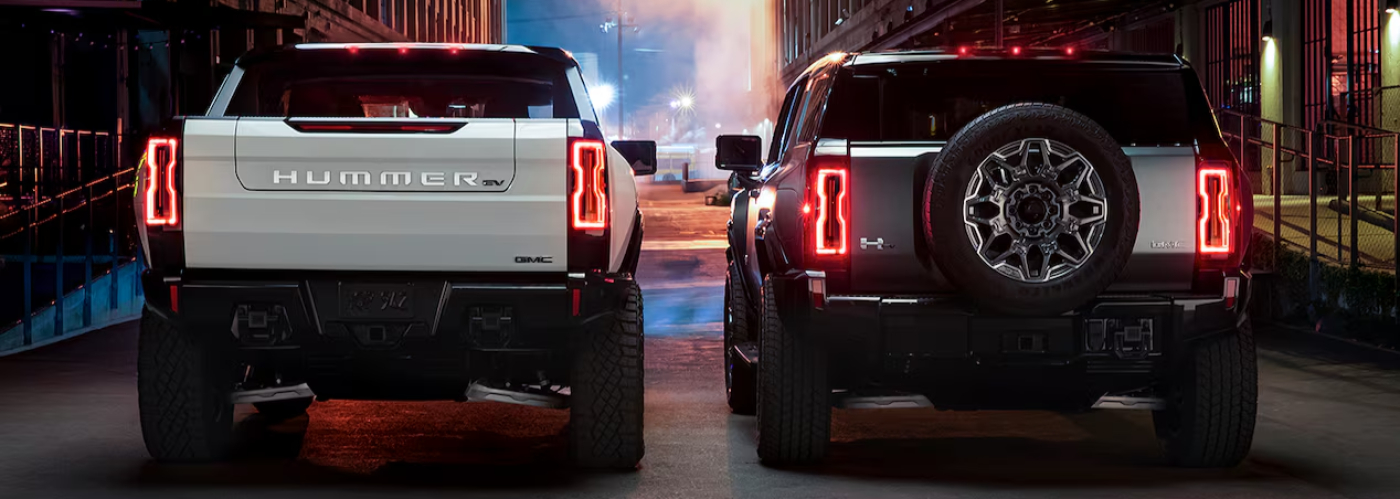
With electric vehicles (EVs) growing in popularity, more Myrtle Beach drivers than ever before want to learn about the cost of owning an EV vs. a gas-powered vehicle. Are EVs expensive to maintain? What does it cost to own an EV vs. a gas-powered car? And how does the cost of EV repair compare to that of a gas car? Read on to get the answers to these questions, then contact us to learn more.
If you need to bring your vehicle in for repairs, check with our parts and service center to see if we have any service coupons or specials on hand for you to take advantage of. You can also call us at (843) 203-8052 to learn more.
First, it should be noted that maintenance costs can vary considerably based on the make and model of your EV, how and where you drive it, the age of the vehicle, and more. You should always consult your Owner’s Manual for clear recommendations on how often you should get your EV serviced.
With that in mind, EVs may require less regular maintenance than gas-powered cars over the same period, since EVs have fewer moving parts. They tend to wear out brake pads more slowly thanks to regenerative braking, and you won’t have to fix or replace parts like:
Even with an EV, you’ll still need to perform some routine maintenance like replacing air filters, checking your windshield wipers, and rotating your tires, but overall, EV maintenance costs should be lower than maintaining a gas-powered vehicle. After all, an EV doesn’t need oil changes, tune-ups, or coolant flushes, and doesn’t use complex multi-speed transmissions. It’s estimated that on average, it costs approximately 6.1 cents per mile to maintain an EV, while it takes 10.1 cents per mile to maintain a gas-powered vehicle. That said, these cost estimates are likely to shift with the current changes in international trade policies.
Additionally, keep in mind that some OEMs offer free maintenance for a set period as part of your vehicle’s warranty. This period usually lasts between one and three years or a pre-set mileage limit and typically only covers scheduled maintenance (see your Owner’s Manual). If EV maintenance is one of your primary concerns, make this a priority when you shop for a new or pre-owned EV.
Will driving an EV save you money? It’s a complicated question, but generally, yes—EVs can be more economical over the long run, though there are a few stipulations to consider. Let’s break it down and focus on two elements: fuel savings and tires.
According to the U.S. Department of Energy, Carolina Forest drivers can save as much as $2,200 a year in fuel costs by driving a fully electric vehicle and up to $1,500 with a hybrid EV. However, it is also true that EVs command higher up-front MSRPs than their gas-powered counterparts, with some sources suggesting that EVs, on average, sell for 12% more than gas-powered models. So, while the cost to own an EV vs. a gas-powered car may be lower over the long haul, the high upfront costs may deter some drivers from getting fully electrified.
This is one of the few areas where you can expect EV maintenance costs to be higher than those of gas-powered vehicles. Due to their heavy batteries, EVs are, on average, heavier than their gas-powered counterparts, meaning EV tires are under more pressure. Combine this with the instant torque and acceleration of an electric motor, and EV tires tend to get worn out more quickly than what you might experience with a conventional internal combustion engine vehicle (ICEV). To counteract this, EV manufacturers create tougher, more resilient tires for electric vehicles, but these tend to be more expensive than conventional tires– 20-30% more expensive, in some cases.
While it does cost more to repair an EV compared to an ICEV, it turns out that most EVs are quite comparable to ICEVs in post-accident repair costs. For example, statistics from Mitchell, a software company that specializes in the collision repair industry, show that the average cost to repair an EV is only $269 more than the average repair cost across all vehicles ($4,474 vs. $4,205, respectively). This is about a 6% difference.
The difference in cost can be attributed to a few reasons, with the main culprits being advanced driver-assist systems, weight, parts sourcing, and labor. Advanced driver-assist technologies are often unrepairable after collisions and need to be replaced outright, and the heavier weight of an EV means that the vehicle may sustain more damage in a collision compared to an ICEV. Plus, up to 90% of EV repairs are done using more expensive OEM-sourced parts as opposed to aftermarket parts, and the vast majority of EVs–up to 77%–are luxury models that are generally more expensive to repair from the get-go.
In addition, specialized knowledge and expertise are required to repair an EV after a crash, especially in de-energizing and removing the battery, the most expensive part of an electric vehicle. This can easily require more labor hours, adding to the overall repair cost.
Now that you’re better acquainted with the cost of EV repair compared to that of a gas car and how much it might cost you to maintain an EV relative to an ICEV, visit our dealership in Conway to continue the conversation with us. You can explore our inventory of EVs, speak with our experts about our promotional offers, and test-drive a few EV models with us. Let us help you find a great EV so you can electrify how you drive around Red Hill!
The latest GMC Sierra 2500 HD has everything you need to take on anything the roads of Myrtle Beach can throw your way, but don’t just take our word for it. In our detailed guide, we highlight the key features and capabilities of this pickup truck. We encourage you to read our guide and see…
The GMC Acadia is renowned for its reliability, spaciousness, comfort, and advanced features. If you are interested in purchasing a 2026 GMC Acadia, take a moment to learn more about its tech features with Hadwin-White Buick GMC, Inc., including safety and infotainment amenities. Contact us with questions and to schedule an appointment at our dealership in Conway. Acadia…
The 2026 GMC Terrain is a compact SUV with engineering inspired by GM trucks, but it offers the seating capacity, legroom, and cargo space of a crossover. Whether you’re already shopping for a GMC Terrain for sale near you, or you’re only beginning to consider a new GMC Terrain for your Myrtle Beach commute, explore our…